
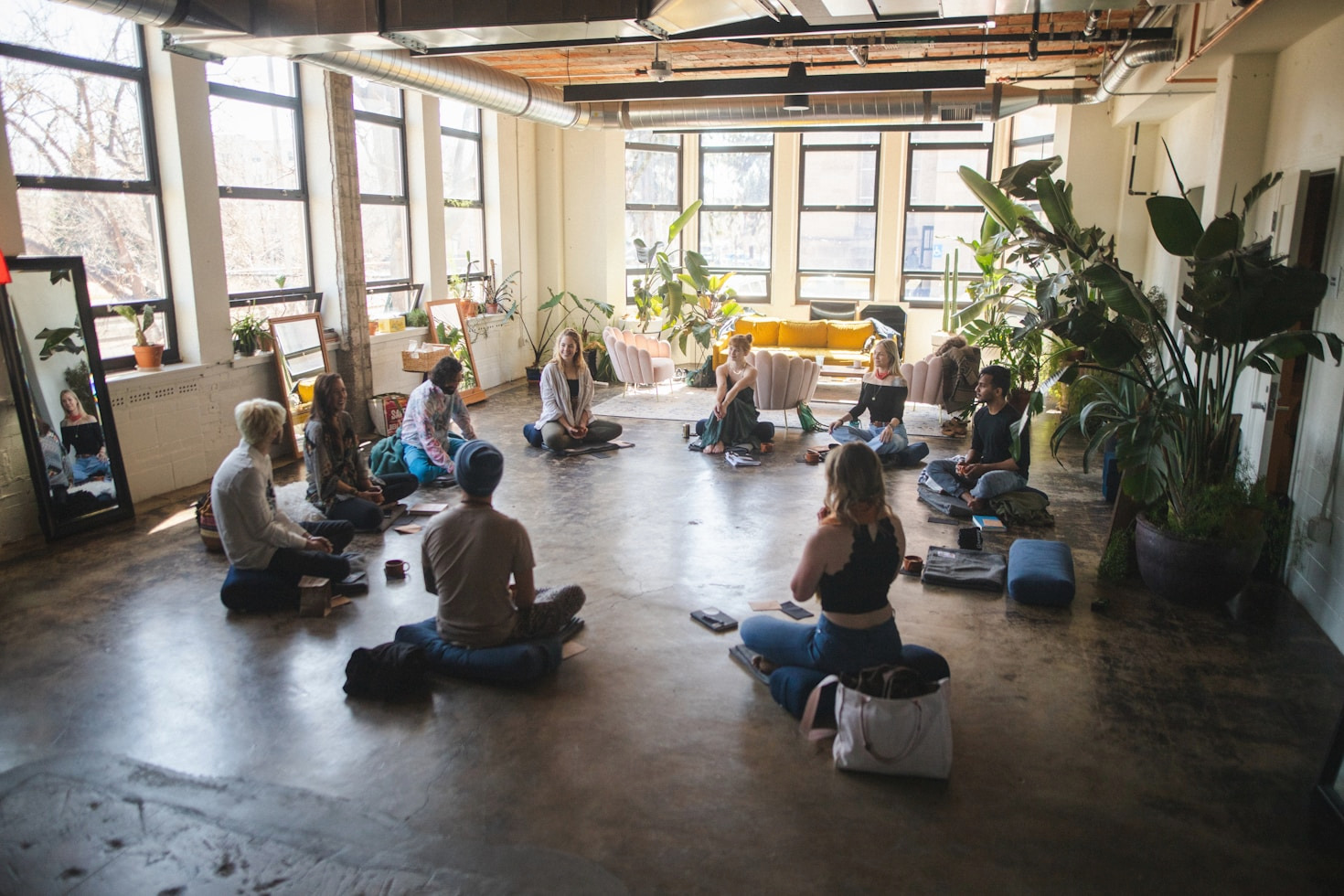
Is your thought a fact?
Have you ever wondered why witnesses to the same crime often give completely different accounts of events during questioning? The question is crucial: are the things they say really facts… or rather their subjective opinions? We are the same, yet completely different, which is reflected in our individual cognitive processes and perception of the surrounding reality… as well as in our interpretation of specific situations, using not only our senses but also patterns of thinking built on the basis of our own unique experiences.
We do not perceive reality in a completely objective way. We look at it through our experiences, emotions, beliefs, and established patterns of thinking. We may all observe the same situation, but each of us can give it a different meaning.
Ask two people what comes to mind when they think of an apple. One person may think about health, another about a pie their grandmother used to make, and someone else about school lunch breaks. It is still the same fruit, but each association leads in a different direction.
The same applies to the way we think about ourselves. Sometimes an interpretation appears so quickly that we accept it as a fact:
“I’m not good enough for this.”
“I always ruin everything.”
“I’m sure I won’t be able to cope.”
“I’m not good enough.”
A thought may feel true simply because it has been repeated many times. That does not mean it represents the whole reality.
At One Sip Better, we believe that change does not always begin with a big decision. Sometimes it begins with a brief pause and one helpful question. That moment can become the first small step towards a more realistic and supportive perspective.
Sometimes it is not the situation itself that limits us, but the way we interpret it.


How, then, can you break free from the cage of subjective, often limiting beliefs that can sometimes make life difficult and reduce psychological well-being? You need a key to open the door… and that key may be objectivity. In Sip of Knowledge #1: Pause and Ask, we will work on an exercise that expands cognitive abilities and helps you see yourself, other people, and the world in a different, slightly more objective light.
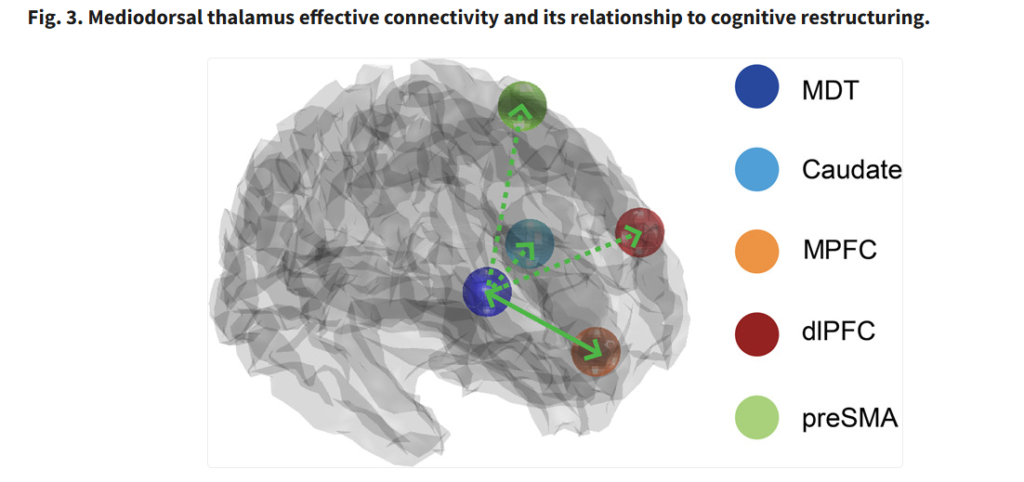
Image source: https://pmc.ncbi.nlm.nih.gov/articles/PMC9095461/figure/Fig3/
Before beginning the Pause and Ask exercise, which supports the process of questioning and objectifying your own beliefs, please look at the graphic above and see which areas of the brain we will activate together in just a moment 😉

Socratic questioning techniques – inspiration for the exercise
Knowledge is your superpower for self-development and increasing psychological well-being, which is why I want to present the background of the Pause and Ask exercise, namely the scientific study A Thalamo-Centric Neural Signature for Restructuring Negative Self-Beliefs, published in Molecular Psychiatry in 2022 (full description here).
The above study aimed to provide new knowledge about the brain mechanisms involved in the cognitive restructuring of negative self-beliefs.
The study participants were trained in Socratic questioning techniques (a method commonly used in CBT) and were then asked to apply the above-mentioned exercises to restructure negative beliefs about themselves while undergoing ultra-high-field 7 T functional magnetic resonance imaging (UHF 7 T fMRI).
The results of the experiment showed that: “cognitive restructuring elicited marked activation in the fronto-striato-thalamic circuit, including the mediodorsal thalamus (MD), a group of deep subcortical nuclei thought to synchronise and integrate prefrontal cortical activity” (*the prefrontal cortex is responsible for higher cognitive functions such as planning, decision-making, abstract thinking, and the regulation of emotions and behaviour).
The researchers also observed: “increased activity in the medial prefrontal cortex (MPFC), a region consistently activated by internally focused mental processing, as well as in lateral prefrontal regions associated with the regulation of emotional reactivity.”
Effects of using Socratic questioning by the study participants:
- Effective reduction in endorsement of negative beliefs – observed after just the first few stages of the experiment.
- Activation of a complex brain network – connecting self-awareness, cognitive control, and subcortical structures (MD and the caudate nucleus).
- Increased activity in cortical regions – needed to re-evaluate thoughts.
- The strength of the MPFC ↔ MD connection is associated with rumination (excessive, negative, recurring thinking about past events, situations, problems, or one’s own thoughts) – individuals with a stronger connection are more likely to fall into negative thought spirals. This means that Socratic questioning may be particularly valuable for such individuals.
If Socratic questions helped the participants actively and effectively question and restructure negative beliefs, which was reflected both in a reduction in the strength of those beliefs and in the clear activation of local and deep brain regions… then there is probably no reason to wait… and it is time to PRACTISE 😉.
What does the Socratic questioning technique involve?
- Goal: it helps identify irrational or maladaptive beliefs and replace them with more realistic ones.
- Mechanism: the questions encourage logical analysis and the discovery of new perspectives.
- Effectiveness in the following areas: reducing depression and anxiety, increasing metacognitive awareness, and improving emotional regulation and self-esteem.
Main stages (according to Padesky & Greenberger, 1995):
- Identifying a negative belief or automatic thought.
- Asking exploratory questions, such as:
- “What evidence is this thought based on?”
- “Are there any other possible explanations?”
- “What would you say to a friend in a similar situation?”
- “What are the consequences of believing this?”
- Reflecting on the logic and usefulness of the thought.
- Developing a more realistic interpretation.
Example:
Belief: “I feel that I am completely worthless.”
Socratic questions for examining and working with the belief:
– “What exactly makes you think this way about yourself?”
– “Are there situations in which you have felt differently?”
– “What achievements, even small ones, can you be proud of?”
– “What would you say to a friend who talked about themselves this way?”
– “What belief would be healthier for you while still being realistic?”
Exercise: “Pause and Ask”
Goal: to question a negative thought about yourself and actively create a new cognitive pathway.
Instructions:
When you catch yourself thinking something like:
“I’m not suited for this,” “I’m worthless,” “I always ruin everything” – follow the steps below:
STEP 1 – Stop the thought like a process
Write it down exactly as it appears:
“My current thought is: …”
For example: “I won’t be able to handle this.”
STEP 2 – Ask three Socratic questions – questioning the belief
- What evidence do I base this thought on? (activate mental diagnostics: data are facts; everything else is cognitive noise)
- Would I look at this situation differently if it concerned someone else, such as a friend?
- What thought would be more realistic and supportive?
STEP 3 – Take a sip of a new perspective
Create a new version of this thought, for example:
“This is difficult for me, but it does not mean that I will not be able to handle it. I have managed many times in the past!”
“I can learn and improve—it is a process, not a final judgement.”
BONUS – One Better Thought
To finish, choose one of the statements that you can return to with your next cup of coffee, tea, or another drink, or during a more difficult moment:
- 💬 “My thought does not define me—I can look at it from a different perspective.”
- 💬 “The fact that I often think this way does not mean that it is the only truth.”
- 💬 “I can pause and choose a more supportive perspective.”
- 💬 “This thought is only one of many possible interpretations.”
- 💬 “I do not have to immediately believe every thought that appears in my mind.”
- 💬 “One good question can bring me closer to a better perspective.”
- 💬 “A small change in thinking can be the beginning of a better day.”
- 💬 “I can change my perspective—calmly, step by step, sip by sip.”
You can also create your own realistic and supportive thought.
Leave a Reply